Sanford (Sandy) Dawsey, MD

Dr. Dawsey recentlyretired as a Senior Investigator at the National Cancer Institute of theNational Institutes of Health, where he worked for 36 years. During his time atNIH, his main focus was the prevention and control of esophageal squamous cellcarcinoma (ESCC).  He performed multiplestudies in China, Iran, Brazil and East Africa to understand the etiology ofthis cancer globally in high-risk populations, and he helped develop clinicallyuseful early detection and treatment techniques for this disease. With US andChinese colleagues, he developed an endoscopic early detection and treatmentprogram for esophageal squamous cell carcinoma that is now used in a nationalprogram to screen over 200,000 adults annually in high-risk areas of China, andthis program has been shown to reduce ESCC mortality by ~33% over 10 years.Most recently, he was a founding member of the African Esophageal CancerConsortium (AfrECC), which was created to perform coordinated etiologic, earlydetection and treatment, and palliation studies to try to reduce the burden ofESCC in Africa. He is currently President of the Board of the AfricanEsophageal Cancer Consortium Foundation.


ETIOLOGY WORKING GROUP

Leadership:

Hannah Simba, APHRC
Yukiko Yano, US National Cancer Institute
CLINICAL WORKING GROUP

Leadership:

Yona Ringo, Tanzania
Lucien Ferndale, South Africa

AfrECC Research

Etiology

Working Group

AfrECC Working Groups are subgroups within the AfrECC consortium that are focused on specific related activities. At the time of application for AfrECC membership, each potential new member will be asked which working group(s) they would like to be a member of. The AfrECC Etiology Working Group includes AfrECC members who are conducting etiologic and molecular studies of esophageal cancer in Africa. These include studies of the genetic, environmental and lifestyle risk factors and mechanistic pathways for esophageal cancer and its precursors.

Major Activities

  • Completion of 7 case-control studies across multiple African sites, enrolling approximately 2,400 cases and 2,400 controls, using harmonized mHealth-based data collection tools.
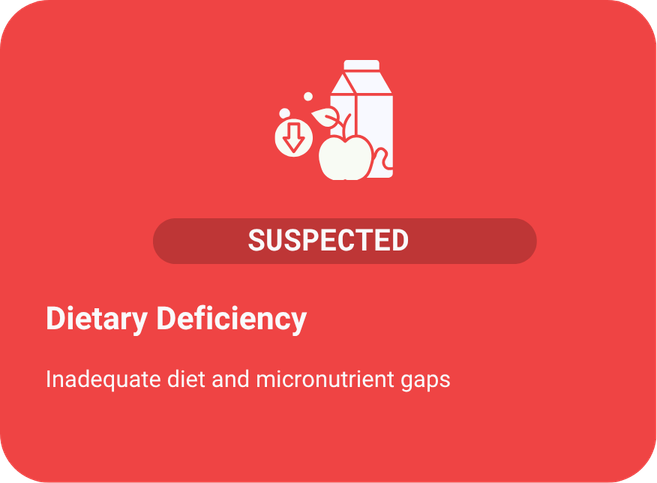
  • In-depth exposure assessments, including hot beverage consumption, household polycyclic aromatic hydrocarbon (PAH) exposure, and micronutrient deficiencies.
  • Expansion of molecular and genomic research, including a coordinated consortium-wide genome-wide association study (GWAS).
  • AfrECC Etiology Pooling Project: A continent-wide effort to combine individual-level data from high-quality African studies, coordinated by the International Agency for Research on Cancer, to increase statistical power and enable robust cross-regional analyses.

AfrECC Research

Clinical

Working Group

The AfrECC Clinical Working Group includes members whose work aims to improve early detection and clinical care of patients with esophageal cancer.
Major Activities

  • An endoscopic capacity survey in 4 countries documented severe shortages in both endoscopic equipment and trained endoscopists compared to western countries.
  • An endoscopic screening study in Kenya showed that 14% of asymptomatic adults had esophageal squamous dysplasia, the curable precursor of ESCC
  • The AfrECC Stent Access Initiative, sponsored by Boston Scientific Corporation and Olympus Corporation,provides access to discounted self-expanding metal stents (SEMS) and conducts workshops to train local endoscopists to insert these stents for palliation of advanced stage ESCC. Since 2018, this hands-on training initiative has conducted 19 workshops in 8 countries, training 66 doctor-nurse endoscopy teams and stenting 344 patients.

AfrECC

Publications

2017

Informing Etiologic Research Priorities for Squamous Cell Esophageal Cancer in Africa: A Review of Setting-Specific Exposures to Known and Putative Risk Factors.

Aetiology
View Publication

2017

Exposure to Biomass Smoke as a Risk Factor for Oesophageal and Gastric Cancer in Low-Income Populations: A Systematic Review.

Aetiology
View Publication

2017

Endoscopic Treatment of Cervical Esophageal Transluminal Bridge.

Treatment, Survival and Survivorship
View Publication

2017

Esophageal Stent Placement without Optical or Fluoroscopic Visualization.

Treatment, Survival and Survivorship
View Publication

2016

Esophageal Squamous Cell Cancer in a Highly Endemic Region.

Aetiology
View Publication

2016

Subtyping Sub-Saharan Esophageal Squamous Cell Carcinoma by Comprehensive Molecular Analysis.

Genomic Profiling and Methylation Studies
View Publication

2016

Esophageal Squamous Dysplasia Is Common in Asymptomatic Kenyans: A Prospective, Community-Based, Cross-Sectional Study.

Early Detection
View Publication

2015

Trends in Upper Gastrointestinal Diagnosis over Four Decades in Lusaka, Zambia: A Retrospective Analysis of Endoscopic Findings.

Descriptive Epidemiology and Case Series
View Publication

2015

Africa's Oesophageal Cancer Corridor: Geographic Variations in Incidence Correlate with Certain Micronutrient Deficiencies.

Aetiology
View Publication

2015

Africa's Oesophageal Cancer Corridor: Do Hot Beverages Contribute?

Aetiology
View Publication

2015

Environmental Risk Factors for Oesophageal Cancer in Malawi: A Case-Control Study.

Aetiology
View Publication

2015

HIV Infection and Domestic Smoke Exposure, but Not Human Papillomavirus, Are Risk Factors for Esophageal Squamous Cell Carcinoma in Zambia: A Case-Control Study.

Aetiology
View Publication

Upcoming Event Calendar

Cadence: Quarterly | Etiology Working Group Meeting
Led by: Hannah Simba and Yukiko Yano

Cadence: Quarterly | Clinical Working Group Meeting
Led by: Lucien Ferndale and Yona Ringo

AfrECC

Research Library

Browse peer-reviewed publications produced by the AfrECC consortium.